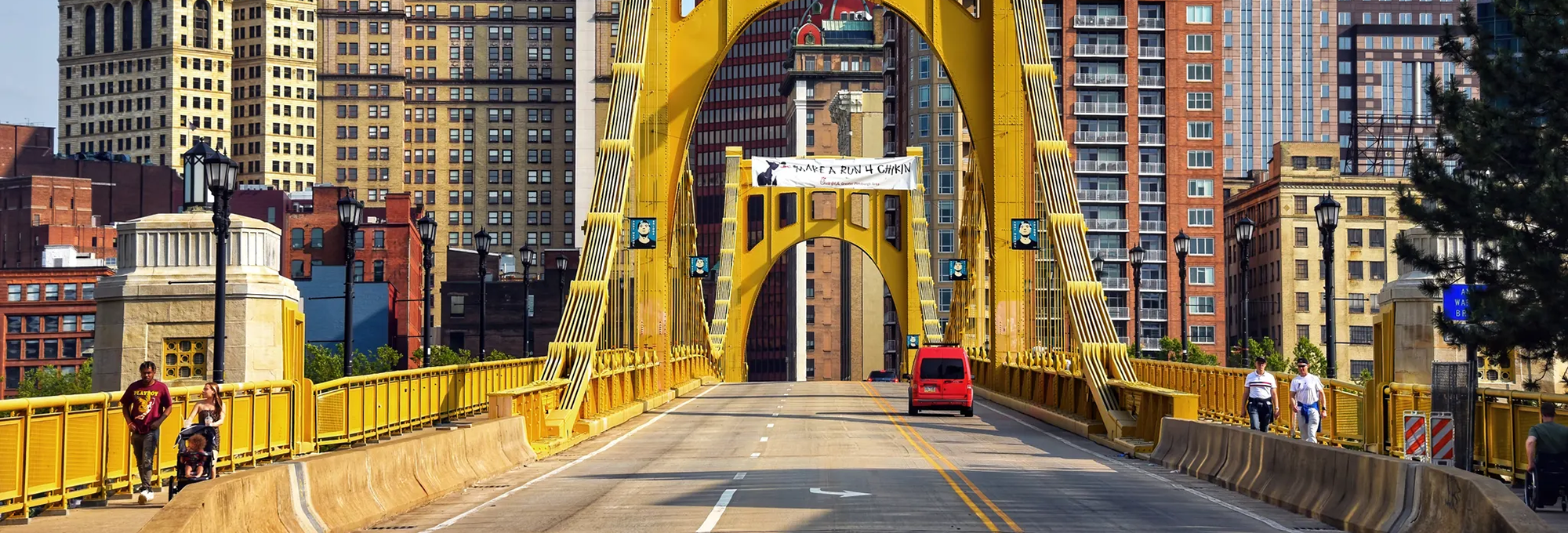
Public Transit in Pittsburgh
Workforce mobility is a competitive advantage — and in the Pittsburgh region, transportation infrastructure is built to support it.
Pittsburgh offers one of the most accessible and efficient commuting environments among major U.S. metropolitan areas. Short average commute times, a compact regional footprint, and multimodal connectivity reduce congestion pressures common in larger markets and improve employee reliability and quality of life.
Pittsburgh Regional Transit (PRT) operates an integrated network of buses, light rail, inclines, and paratransit services connecting downtown Pittsburgh with innovation districts, healthcare campuses, universities, residential neighborhoods, and suburban employment centers. Real-time tools, mobile fare options, and a Free Fare Zone in the urban core enhance ease of access for both daily commuters and visiting professionals.
Regional and global connectivity is anchored by Pittsburgh International Airport, offering nonstop service to major domestic markets and key international hubs. Direct interstate access via I-79, I-76 (Pennsylvania Turnpike), I-70, and I-376 provides efficient links to Northeast and Midwest markets.
For employers, this means dependable workforce access and operational efficiency. For talent, it means living in a region where transportation supports opportunity, not congestion.
Commute Time
26.2 Minutes
Allegheny County (Census American Community Survey)
23.4 Minutes
City of Pittsburgh (Census American Community Survey)
52%
transit users commute in under 30 minutes (Moovit Global Public Transport Report, 2022)
How to Get Around
Walk
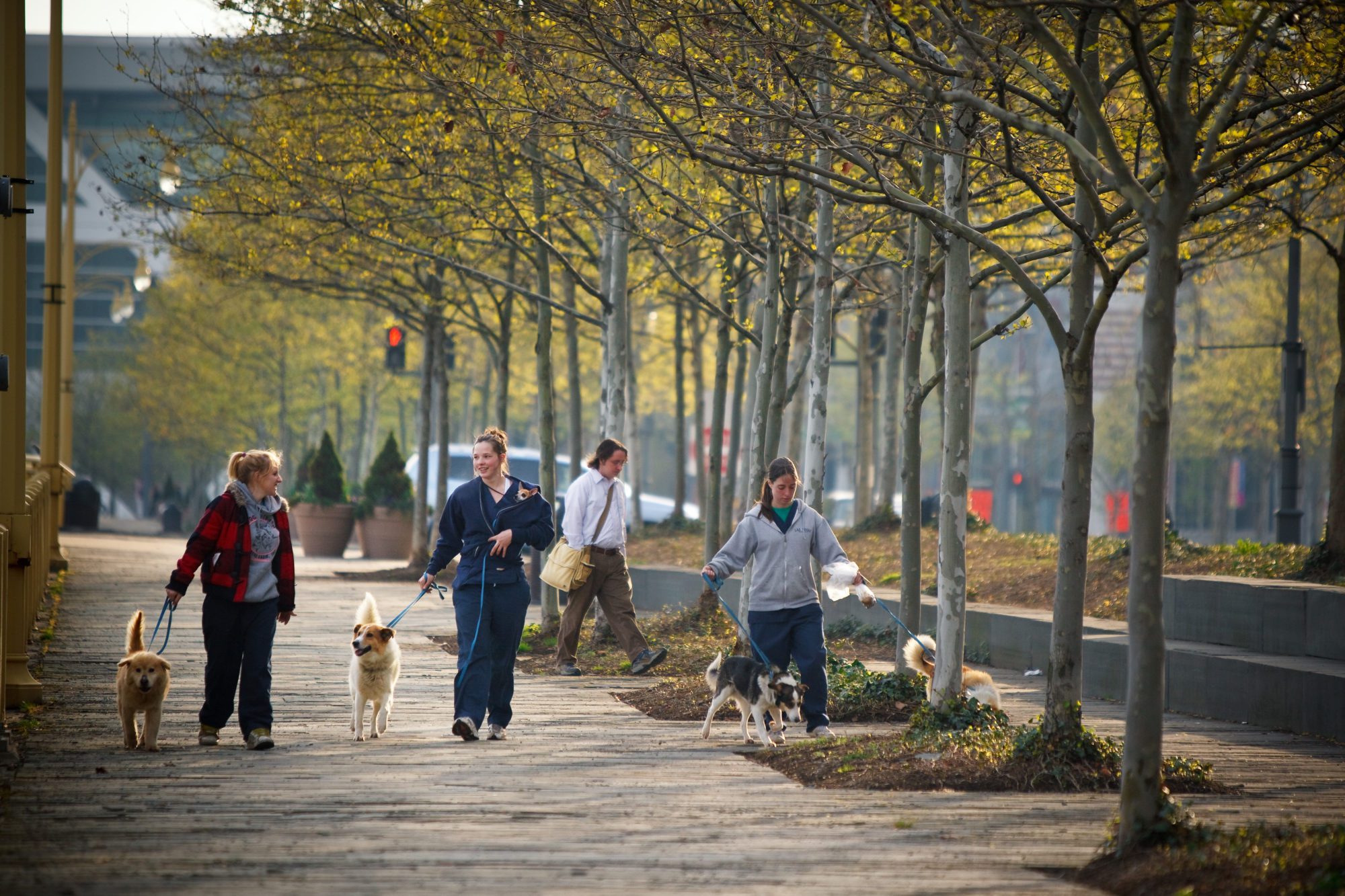
Atop its world-class transit system, Pittsburgh is also a really great city for getting around on foot. Earning a 62 average on Walkscore, Pittsburgh is right up there with some of the most walkable cities in the United States. Considered one of the best places to live in the U.S. without a car, Pittsburgh is a healthy, easy place to be a stress-free and car-free commuter.
Bike
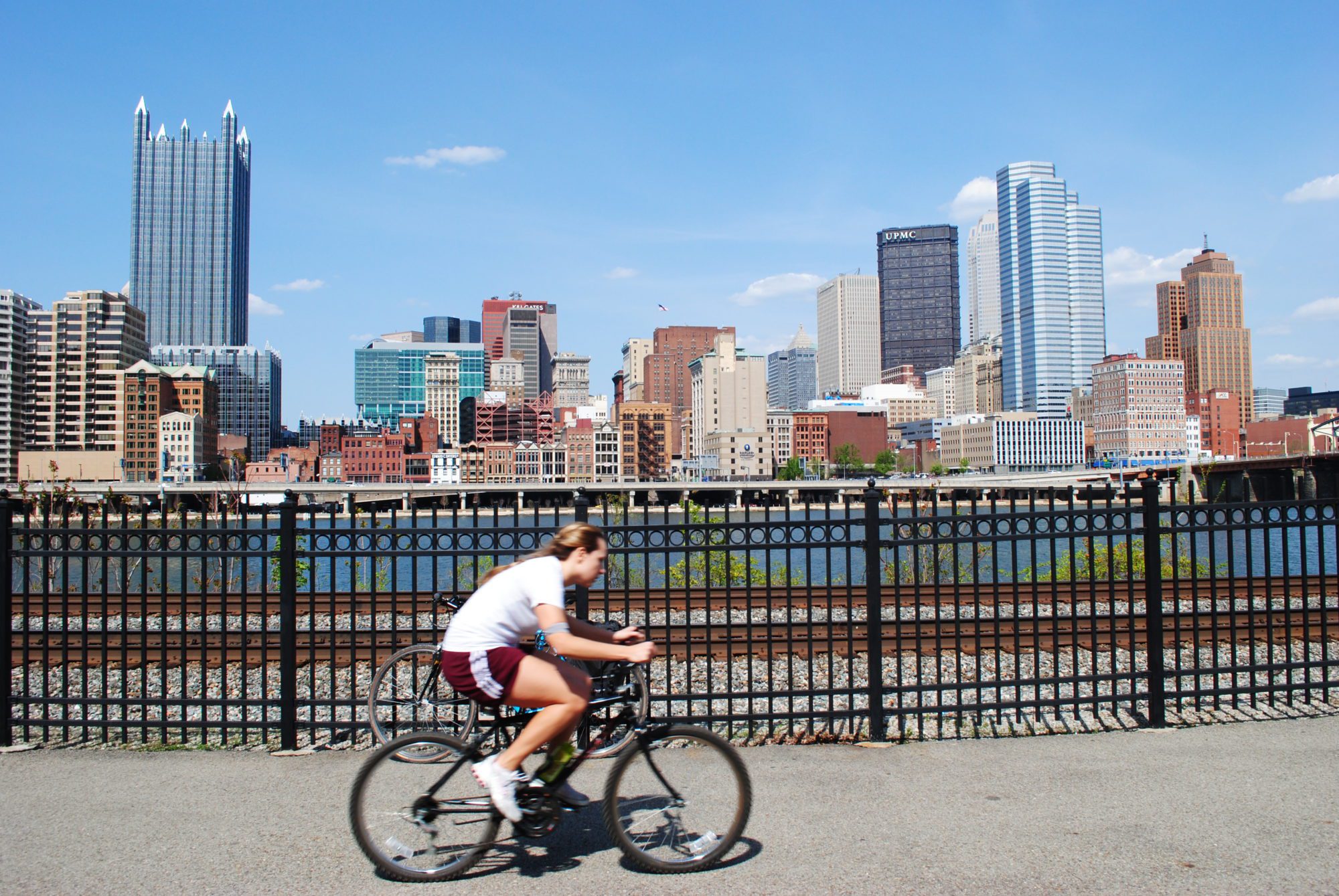
One of the perks of public transportation in the Pittsburgh area is that you do not have to own your own bicycle to enjoy the pleasure of biking around the city. With our bike share system (called POGOH[PC1] ), you can pick up a two-wheeled ride from a selection of more than 350 bikes (both traditional pedal bikes and e-assist bikes) at any of the 35+ stations available throughout the downtown region. Pittsburgh likewise boasts 30 miles of on-street bike lanes and 44 miles of bike-friendly trails, which offer scenic routes to popular destinations, including stadiums.
Public Transportation
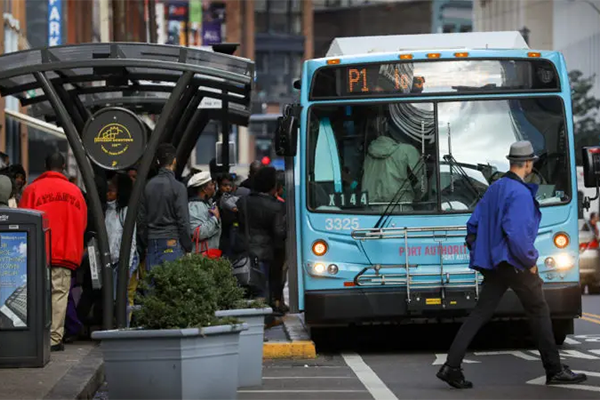
Pittsburgh Regional Transit makes it easy to explore the city and the region without the hassle of driving and parking. With an extensive network of buses, light rail, and inclines, riders can get to downtown, vibrant neighborhoods, major employers, universities, sports venues, and cultural attractions with reliable, affordable service. Whether you’re commuting to work or heading out for a night in the Strip District or Lawrenceville, transit is a convenient way to move through Pittsburgh while avoiding traffic and enjoying the city’s unique character along the way.
PRT also operates two of the country’s few remaining historic funiculars — the Monongahela and Duquesne Inclines — offering both everyday transportation and some of the best skyline views in the region.
For visitors, public transit is a simple way to experience more of what Pittsburgh has to offer. Real-time arrival tools and easy-to-use fare options help you navigate confidently, whether you’re riding to a museum in Oakland, catching a game on the North Shore, or connecting to Pittsburgh International Airport. From iconic hillside views to walkable business districts, Pittsburgh Regional Transit helps residents and travelers alike discover the region with less stress and more freedom.
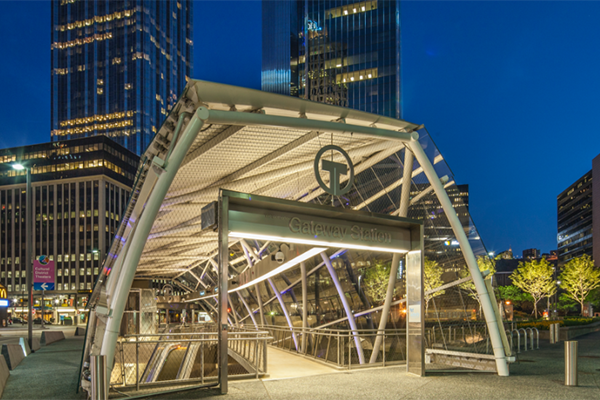
Regional Bus Network
Pittsburgh regional transit bus services shine thanks to our dedicated bus operators, who ensure reliable downtown service for all passengers. Even when detours are necessary due to construction or special events, our adaptive network maintains strong ridership by quickly adjusting routes to minimize delays.
Commuters and visitors alike appreciate the commitment of our bus teams to provide seamless and efficient transportation across the city. With the Pittsburgh regional transit continuously enhancing its operations and prioritizing customer satisfaction, getting around downtown and beyond has never been easier or more dependable.
Travel downtown from outside the urban core with service and park-and-ride options from Beaver County Transit Authority, Westmoreland Transit, Mid Mon Valley Transit, New Castle Area Transit Authority, Butler Transit Authority, and Freedom Transit. Schedules vary between weekdays and weekends, but information about lines and running times is available at nearly every bus stop.
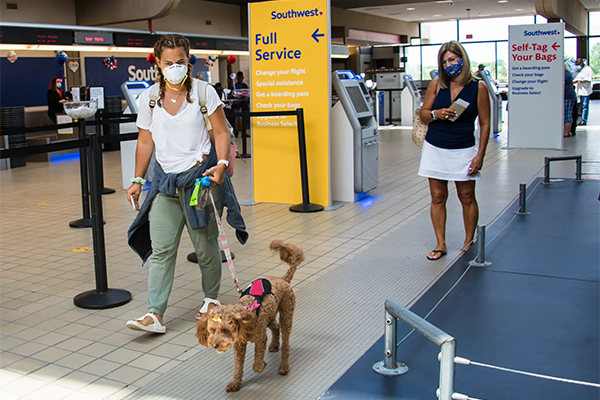
Pittsburgh International Airport
The region is anchored by Pittsburgh International Airport, offering nonstop flights to major U.S. cities and international destinations. The airport supports business travel, logistics, and global connectivity and is accessible by car, ride-share, and public transit, including PRT’s 28X Airport Flyer service.
Pittsburgh’s transportation network is further strengthened by direct access to major interstate highways, including I-79, I-76 (Pennsylvania Turnpike), I-70, and I-376, providing efficient connections to regional markets across the Northeast and Midwest. Making it quick and easy to find an artery right to Pittsburgh’s award-winning airport.
- One of the Fastest Growing Airports in the U.S. (Airlines for America, 2023)
- Flight Delays Among Shortest in the U.S. (United States Bureau of Transportation Statistics, 2024)
- Less than a 90-minute flight from 50% of North America’s population
- Flights to 50+ non-stop destinations, including London and Reykjavik

Share a Ride
- The Local Necessities: Uber, Lyft, and more
- The National Network: Greyhound, Megabus and Flixbus all maintain stations in Pittsburgh
- The Scooters: Jump on and ride one of the shared low-speed Spin electric scooters
- The Bikers: POGOH bike share system comprises 60+ stations and 600+ bikes, including traditional pedal bikes and e-assist bikes
- The Duquesne Incline and the Monongahela Incline operate two distinct funicular cars that run up the side of Mt. Washington
Need Quantitative Data on Moving around the Region?