
Pittsburgh Regional Infrastructure & market access
The Pittsburgh region’s combination of assets and strategic location sets it apart from other metros.
The Pittsburgh region is still a leading steel and metals manufacturer, but it is much more than that. Pittsburgh has an economy that includes innovative technology and life sciences companies, top-ranked educational institutions, such as Carnegie Mellon University and the University of Pittsburgh, robust retail and hospitality and so much more. Accessing these assets makes regional infrastructure – physical and digital – critical.
Positioned at the intersection of America’s industrial core and innovation economy, the Greater Pittsburgh Region provides unmatched access to markets, talent, energy, research, and multimodal infrastructure
Domestic & International Direct Flights
Inland Port
interstate highway system
Close to major metros, international markets, and natural resources
Closer than you think
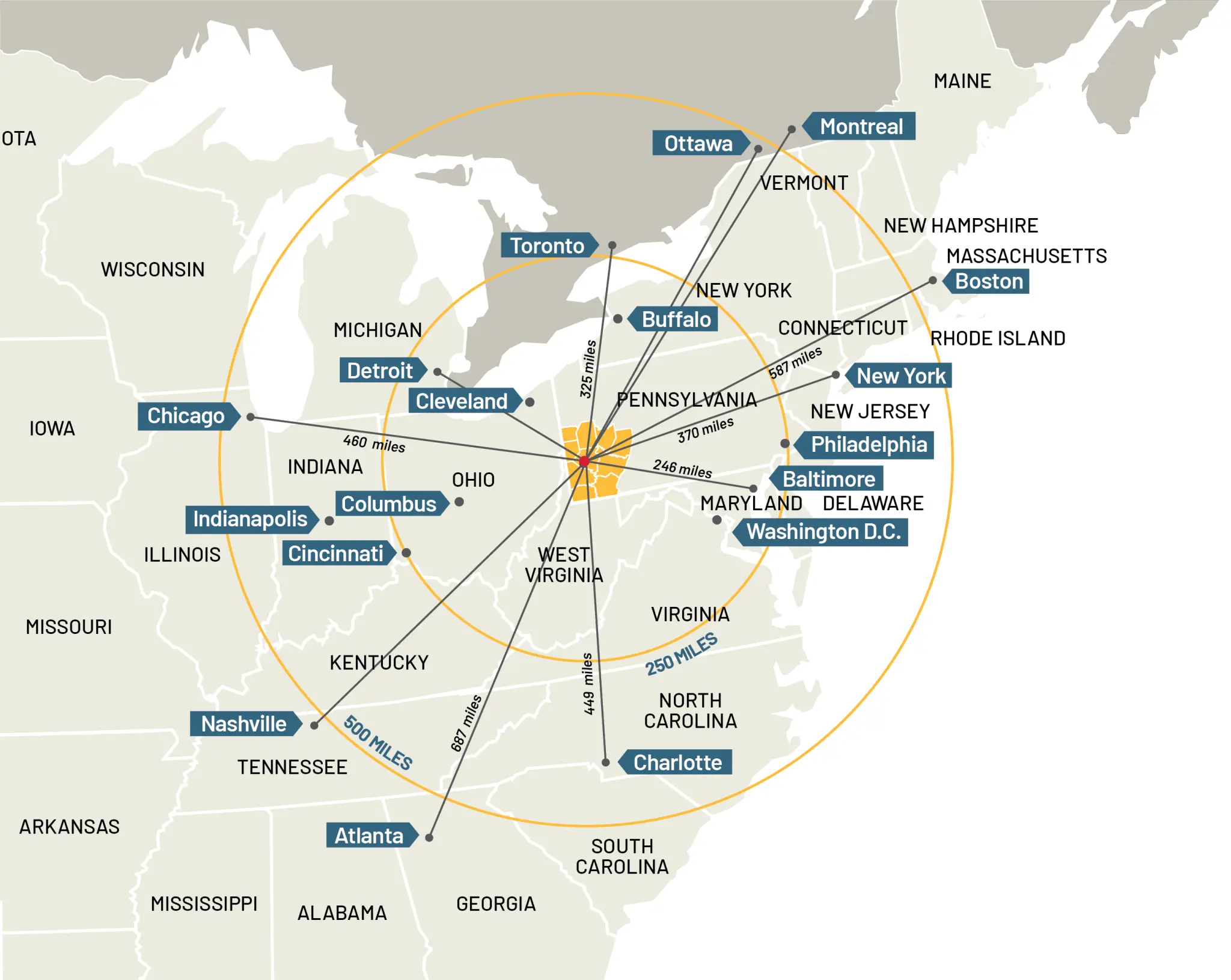
The Pittsburgh region sits in a prime spot on the East Coast—close to the action, but with its own clear advantages. Positioned within a 500-mile drive of 42% of the U.S. and Canadian population and buying power, it’s an ideal hub to optimize your operations and maximize your impact.
Thanks to recent federal funding, Pittsburgh and Southwestern Pennsylvania are more connected than ever, with modern broadband networks and seamless transportation links to major markets.
Connecting to Direct Flights
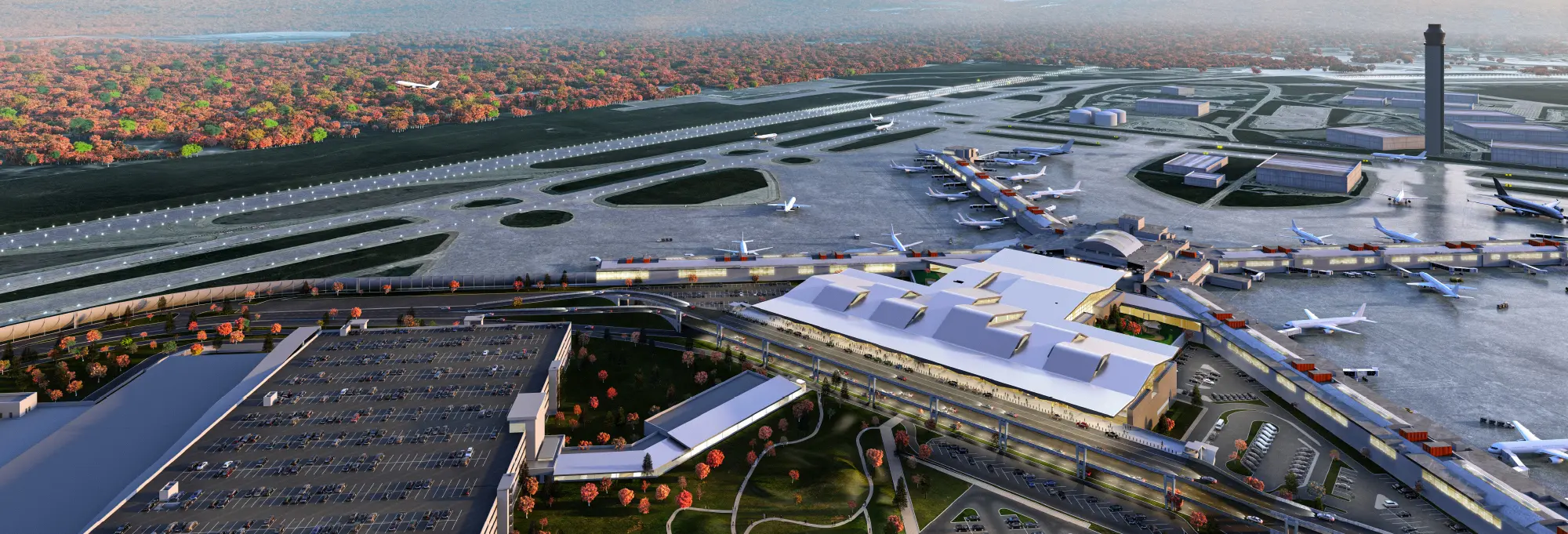
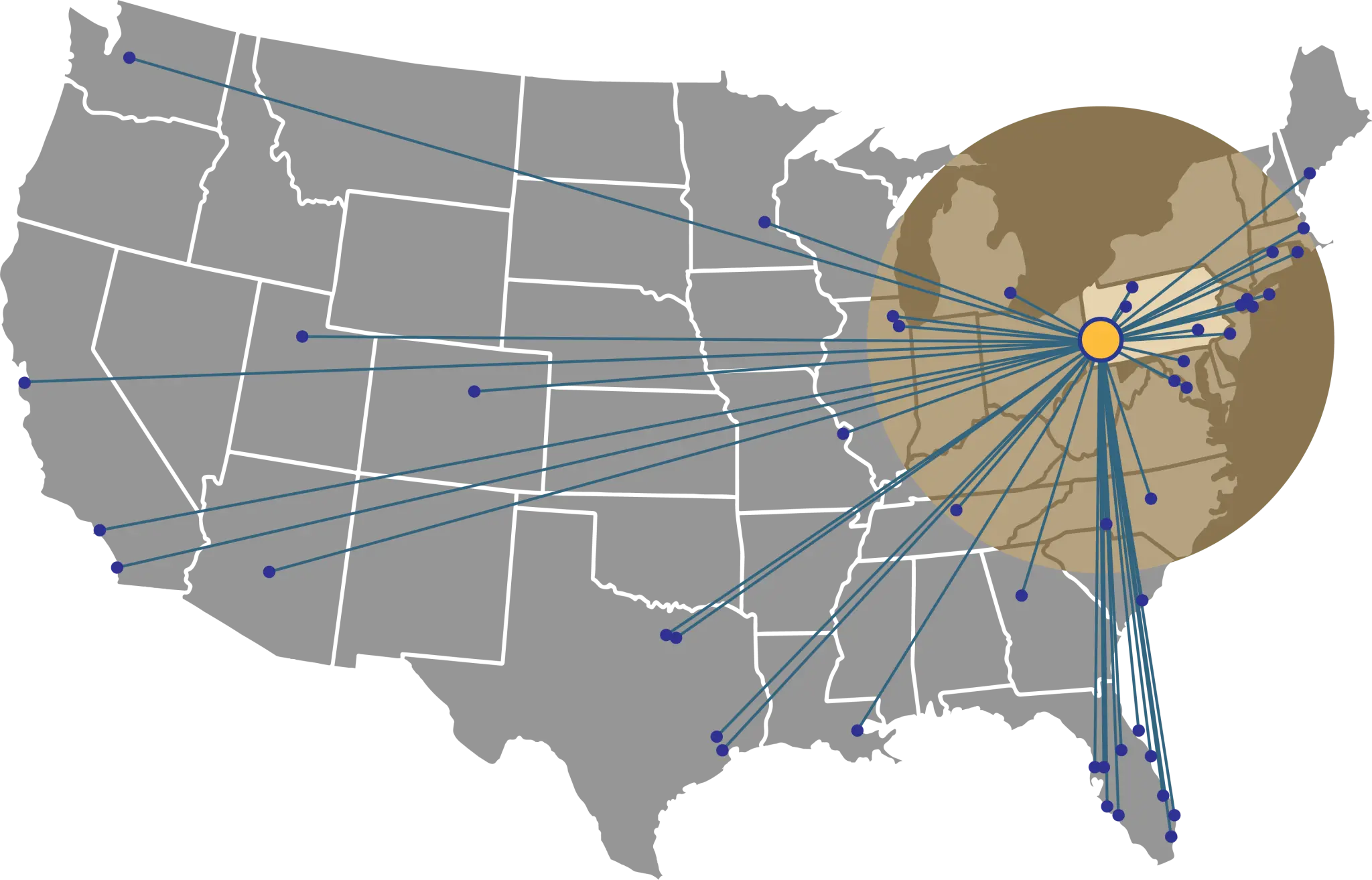
Fresh off a $1.5 billion terminal modernization project that earned it Airport of the Year honors for a second time, Pittsburgh International Airport (PIT) serves as a vital economic engine and gateway for regional investment. Connecting travelers globally through 16 major carriers—including American, Delta, Southwest, and United—PIT offers seamless access to more than 60 nonstop destinations, ensuring that prospective partners, talent, and commerce are effortlessly linked to the Southwestern Pennsylvania region.
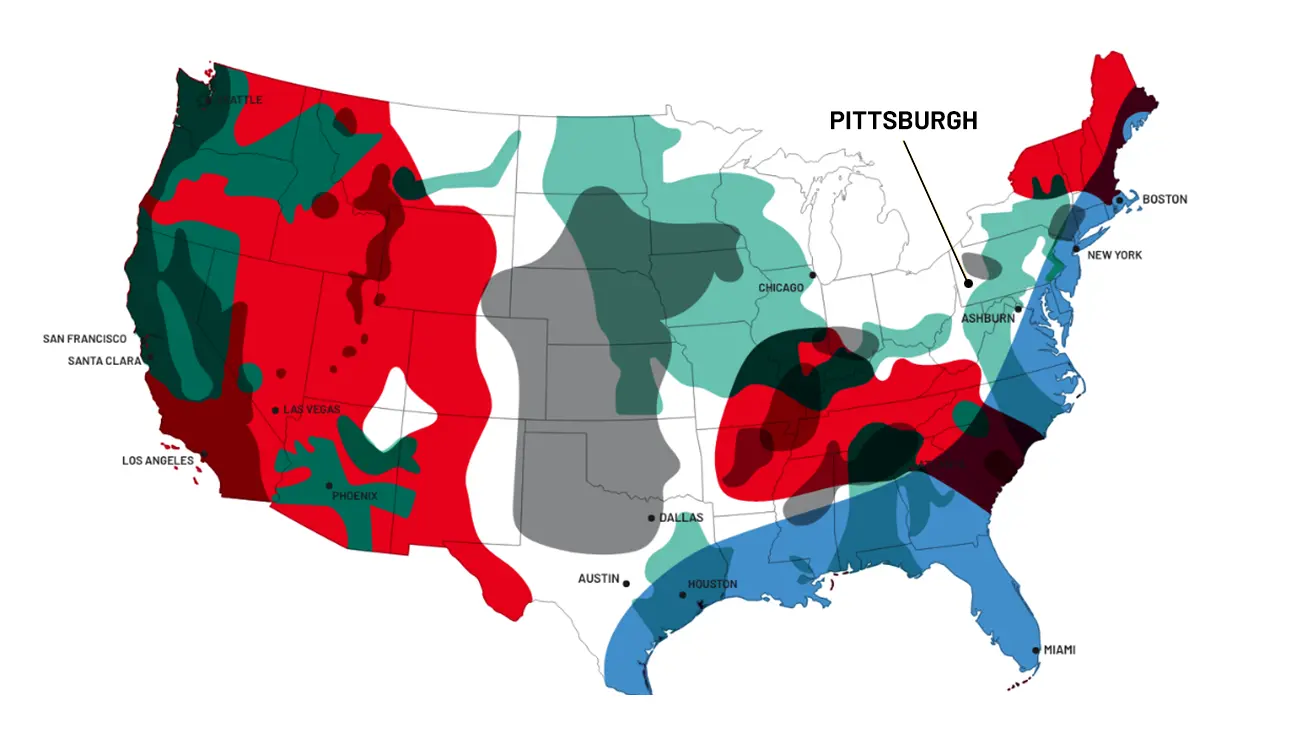
A Safe Place to do Business
The Pittsburgh area is one of the few areas around the country that enjoys near freedom from natural disasters so supply chains can keep running.




Regional Transportation
Airport Access

Pittsburgh International (PIT) serves 60 destinations with non-stop flights
Nonstop international service to London (and beyond) on British Airways
Four runways with available capacity; extensive air cargo facilities with direct runway access
Named J.D. Power #2 Medium Size Airport in North America (2022)
24 general aviation airports throughout the region
Rail
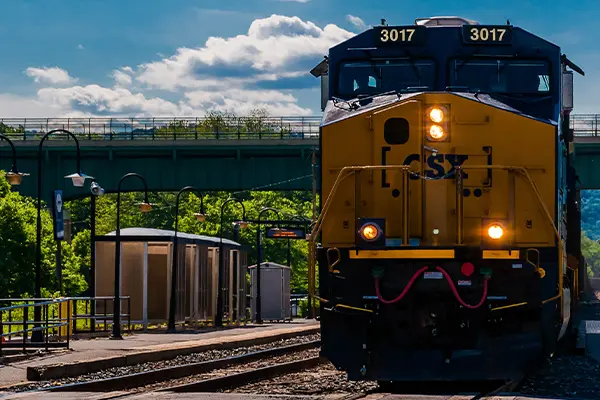
Over 1,300 miles of freight railway
Three Class 1 railroads: CSX, Norfolk Southern, and Bessemer & Lake Erie (owned by Canadian National)
One intermodal terminal: Norfolk Southern
Rivers

Second-largest and fourth-busiest inland port in the U.S.
22 river terminals throughout the region
Highways

Four major interstate highways include I-70, I-76 (PA Turnpike), I-79 and I-80
I-68 just south of outside the region
City and regional authorities, like Pittsburgh Regional Transit, provide a robust network of transit options, including light rail and bus.
PennDOT oversees programs and policies affecting highways, urban and rural public transit, airports, railroads, ports and waterways.
Help write the region’s next chapter
Schedule a conversation today and join the organizations helping shape the future of Southwestern Pennsylvania.